You've bought your KGFB. You've registered the car. And then someone asks whether you have CASCO — and you realise you've never heard the term before.
KGFB gets all the attention because it is mandatory. CASCO is optional, less understood, and — depending on the car you're driving — potentially the more important policy.
What CASCO Insurance Covers in Hungary
CASCO (from the Italian word for helmet, used across Central and Eastern Europe to describe comprehensive motor insurance) covers damage to your own vehicle. KGFB covers damage you cause to other people and their property. They are entirely separate products and protect entirely different things.
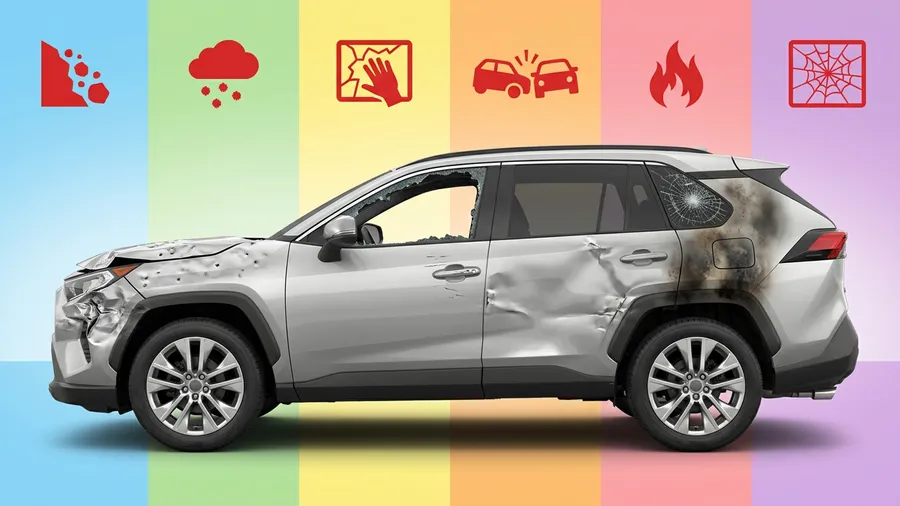
A typical CASCO policy in Hungary covers your vehicle for the following events:
- Collision damage — repair costs when you are at fault in an accident, or when the other driver is at fault but uninsured (which happens more frequently than insurers like to advertise).
- Theft — replacement value or agreed value if the car is stolen and not recovered, or repair costs if recovered damaged.
- Vandalism — keying, broken windows, damaged mirrors caused by third parties.
- Natural damage — hail (particularly relevant in Hungary, which experiences significant hailstorm damage in summer months), flood, falling trees, fire.
- Glass damage — windscreen chips and cracks. Some policies offer glass cover as a separate, lower-cost add-on without requiring full CASCO.
What CASCO does not cover: mechanical breakdown, wear and tear, damage from an expired MOT, or events that were preventable with normal maintenance.
The Hungarian CASCO Market: What Makes It Different
Hungarian CASCO pricing is calculated primarily on the vehicle's Eurotax catalogue value — a standardised depreciation schedule that determines the insured value. This matters significantly for used car buyers because the Eurotax value may be lower than what you paid for the vehicle (particularly for non-standard configurations or well-maintained examples) or higher (for older vehicles in above-average condition).
Always check the Eurotax value of a potential vehicle before purchasing CASCO — your insurer uses this figure, not your purchase price, when calculating payouts.
Hungarian CASCO policies come in two broad structures. All-risk CASCO (teljes körű CASCO) covers all the events listed above. Partial CASCO (részleges CASCO) typically covers theft and natural damage only, excluding collision. Partial CASCO is significantly cheaper — approximately 30–50% of all-risk premiums — and is a practical option for older vehicles where collision repair costs might exceed the car's value.
Is CASCO Worth Buying for Your Specific Car?
The honest answer depends on three factors: the car's value, your financial resilience, and Hungary's specific risk environment.
For cars worth over 4,000,000 HUF: All-risk CASCO is almost always worth purchasing. Annual premiums typically run 60,000–150,000 HUF depending on value, age, and your record. A single at-fault collision that writes off a 5,000,000 HUF car is a significantly worse financial outcome than several years of premiums.
For cars worth 2,000,000–4,000,000 HUF: Partial CASCO (theft and natural damage) is worth considering, particularly given Hungary's hail risk in summer. Full all-risk CASCO may approach the borderline where annual premiums represent a meaningful proportion of the vehicle's annual depreciation.
For cars worth under 2,000,000 HUF: The maths often doesn't work for full CASCO. If the car is worth 1,500,000 HUF and annual CASCO premiums are 80,000–100,000 HUF, you are paying a significant proportion of the car's value annually for protection. Self-insuring at this value level — maintaining a repair fund rather than paying premiums — is a rational choice many experienced drivers make.
The Hail Problem: Why Budapest Expats Underestimate This Risk
Hungary experiences some of the most significant hailstorm activity in Central Europe, concentrated in the summer months from May to September. Budapest and the Pest plain are particularly exposed.
A serious hailstorm can produce golf ball-sized hail that causes 500,000–2,000,000 HUF of bodywork damage in minutes. The damage is characterised by hundreds of small dents across the bonnet, roof, and boot lid — each one individually minor but collectively representing a complete repaint and panel work bill.
Many expats arrive from countries with less hail risk (the UK, for example, rarely sees damaging hail) and simply don't consider it as a car ownership risk. This is one of the specific reasons partial CASCO for natural damage makes sense in Hungary even for lower-value vehicles that wouldn't otherwise justify full coverage.
How to Buy CASCO in Hungary as an Expat
Key terms to understand: Önrészesedés is the excess (deductible) — the amount you pay yourself on each claim before the insurer covers the remainder. A higher excess means lower premiums. Kártörténeti igazolás is your claims history certificate — the equivalent document to a no-claims bonus certificate, which can reduce premiums if you have a clean history.
CarSherpa's DeskSherpa service handles the CASCO comparison, translation of key terms, and policy setup in English — ensuring you understand exactly what you're covered for before you sign.
Want to understand whether CASCO is worth it for the specific car you're buying? Let CarSherpa review the numbers and arrange the right policy. [Inquire below →]