The Expat’s Guide to the Hungarian Used Car Market
If you are an expat looking to buy a used car in Hungary, you have probably spent hours scrolling through Használtautó.hu. You find a car that fits your budget, negotiate a price with the seller, and assume you are ready to drive away.
Unfortunately, the sticker price is never the final price.
Hungary has a strict, heavily bureaucratic vehicle registration process. Between property acquisition taxes, mandatory origin checks, and the notorious registration tax for imported vehicles, the hidden administrative costs can easily add hundreds of thousands of Forints to your budget.
Beyond the government fees, the Hungarian and broader Central/Eastern European markets are rife with hidden traps—like odometer fraud and undisclosed accident damage—that can cost you even more in unexpected repairs.
In this guide, we break down exactly what it costs to buy a 5,000,000 HUF used car in Hungary, compare a domestic car versus an imported one, and show you how to avoid buying a money pit.
Administrative Costs: Buying a Hungarian-Registered Used Car
Let’s assume you are buying a used car that already has Hungarian license plates. For our example, we will use a 5,000,000 HUF car that is 6 years old with a 100 kW (136 HP) engine.
Even though the car is already in the Hungarian system, you must officially transfer ownership at the local government office (Kormányablak) within 15 days of signing the contract.
Here are the mandatory fees you will pay:
- Property Acquisition Tax (Vagyonszerzési illeték): This is the largest fee. It is calculated based on the car’s engine power (kW) and age. For a 6-year-old, 100 kW car, this tax is roughly 55,000 HUF.
- Origin Check (Eredetiségvizsgálat): A mandatory physical check by an official garage to ensure the VIN and engine numbers haven't been tampered with or reported stolen. For a standard passenger car, this costs between 17,000 to 20,000 HUF
- New Registration Card (Forgalmi engedély): 6,000 HUF.
- New Ownership Booklet (Törzskönyv): 6,000 HUF.
- Mandatory Liability Insurance (KGFB): You must purchase insurance before you can transfer the car. Prices vary wildly based on your driving history and age, but budget at least 60,000 to 100,000 HUF annually.
Total Administrative Cost for Scenario A: Roughly 84,000 HUF (plus your chosen insurance premium).
Administrative Costs: Buying a Freshly Imported Car in Hungary
The Hungarian market is flooded with cars imported from Germany, Italy, and Austria. If you buy a car that has just crossed the border and does not yet have Hungarian license plates, the administrative burden is much higher.
Using that same 5,000,000 HUF, 100 kW, 6-year-old car (assuming it has a EURO 5 or 6 emissions rating), here are the extra fees required to nationalize the vehicle:
- Registration Tax (Regisztrációs adó): This tax penalizes older, highly polluting cars. For a relatively modern EURO 6 car, it might be around 30,000 to 50,000 HUF. For an older, higher-emission diesel, this can easily exceed 200,000 HUF.
- Technical Exam / Naturalization (Műszaki vizsga / Honosítás): If the car has a valid EU MOT (TÜV), nationalizing the paperwork costs 8,000 HUF. If it needs a brand new Hungarian MOT, expect to pay around 16,290 HUF minimum.
- New License Plates (Rendszámtábla): 8,500 HUF.
- Standard Transfer Fees: You still have to pay the Property Acquisition Tax (55,000 HUF), Registration Card (6,000 HUF), and Ownership Booklet (6,000 HUF).
Total Administrative Cost for Scenario B: Roughly 121,500 to 146,000 HUF (plus insurance).
Important Legal Note: By Hungarian law, the buyer and seller can negotiate who pays for the Origin Check or the MOT, but the Property Acquisition Tax and Registration Tax always fall on the buyer. Make sure this is clearly stated in your bilingual purchase contract.
The Real Hidden Cost: Used Car Fraud in Hungary
While government taxes are annoying, they are predictable. The real danger in the Hungarian and Balkan used car markets comes from intentional fraud. Paying 5,000,000 HUF for a car that needs a 1,500,000 HUF engine rebuild is the ultimate hidden cost.
Here are the three most common traps we see in Budapest:
1. Odometer Fraud in Hungary: How Mileage Rollbacks Work
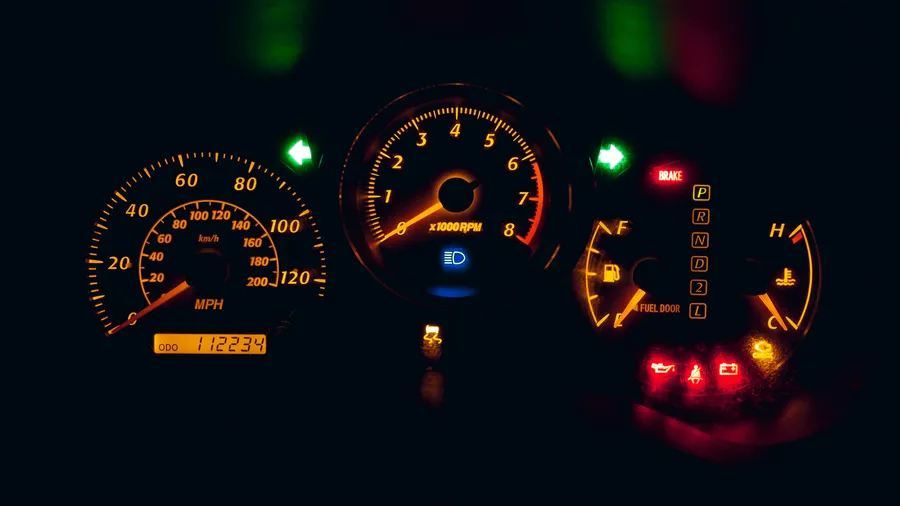
Rolling back the mileage is highly illegal, yet still incredibly common, especially on imported cars. A car might have been used as a taxi in Vienna for 300,000 kilometers, only to be imported to Hungary and "magically" display 120,000 kilometers on the dashboard. Because the Hungarian JSZP registry only tracks the car after it enters the country, this fraud often goes completely unnoticed by the average buyer.
2. How Sellers Hide Accident Damage on Used Cars in Hungary
Many imported vehicles are bought at salvage auctions in Western Europe, brought to Eastern Europe, and cheaply repaired. Sellers will apply thick layers of body filler (Bondo) and a fresh coat of paint, selling the car as "accident-free" (sérülésmentes). Underneath, the structural integrity of the chassis may be deeply compromised.
3. The Fake Private Seller Scam: How Dealers Avoid Giving You a Warranty
Under Hungarian consumer protection law (Szavatosság), if you buy a used car from a registered dealership, they must provide a 1-year implied warranty for hidden major mechanical defects. To avoid this legal liability, many shady dealers will pretend to be private citizens, having you sign a contract with a random individual's name. If the transmission blows up a week later, you have zero legal recourse.
How to Avoid Buying a Money Pit: Independent Car Inspection in Budapest
You cannot avoid government taxes, but you can absolutely avoid buying a clocked, crashed, or mechanically failing car.
At CarSherpa, we act as your independent, English-speaking automotive guide. Before you sign any paperwork or hand over millions of Forints, we travel directly to the seller to perform a rigorous Pre-Purchase Inspection (PPI).
Our process eliminates the guesswork:
- We scan the car's electronic control units to uncover cleared fault codes, hidden engine issues, and verify the true, digital mileage deep within the car's computer.
- Using professional coating thickness gauges, we map the entire car to find hidden accident damage, cheap welding, and body filler.
- We bypass the Hungarian JSZP blind spot, pulling international data to uncover the car's true global past.
You cannot avoid the taxes. But you can absolutely avoid buying a clocked, crashed, or mechanically failing car. CarSherpa travels to the seller, inspects the vehicle in full, and gives you a clear written report — including a repair cost estimate you can use as negotiating leverage.
Ready to find a safe, reliable car?