Hungary has one of the highest rates of odometer fraud in Central Europe. The practice — rolling back a vehicle's recorded mileage to inflate its apparent value — is illegal, but enforcement is inconsistent and detection is difficult without the right tools and knowledge.
Most expat buyers are aware that imported cars carry a higher fraud risk, particularly vehicles that crossed the border from Germany, Austria, or further afield. What fewer people realise is that domestically sold Hungarian vehicles are also affected — and in some cases more so, because the fraud has had longer to become embedded in the car's history.
How Odometer Fraud Works on Domestic Vehicles
On older vehicles, odometer manipulation was a mechanical process — physically rolling back an analogue dial. On modern cars with digital dashboards, the process is electronic and requires specialist equipment, but that equipment is widely available and the service is openly offered in the grey market across Hungary.
The manipulation is typically done at the point of private sale, or occasionally by dealers who acquire high-mileage trade-ins and prepare them for resale. A car with 220,000 kilometres on the clock might be presented for sale showing 140,000. The difference can justify a price premium of 500,000 HUF or more on a mid-range family car.
The Hungarian government's vehicle history database (JSZP) records odometer readings from Műszaki vizsga inspections, which are required every two years. This means the JSZP can reveal obvious manipulation — but only for the period the car was registered in Hungary. Imported vehicles with manipulated readings from abroad won't show the anomaly in the Hungarian records at all.
Warning Signs You Can Check Yourself
Before paying for any professional check, there are several things any buyer can assess visually. Wear patterns on the steering wheel, gear lever, driver's seat, and pedal rubbers are among the most reliable physical indicators of actual use. A car claiming 80,000 kilometres with a deeply worn driver's seat bolster and smooth pedal rubbers has almost certainly covered considerably more.
Service history documentation, if present, should be cross-referenced against the displayed mileage. Stamp intervals that show suspiciously low mileage between services — or stamps that jump forward without explanation — are worth questioning.
The condition of the engine bay relative to the claimed mileage is also informative. Hoses, seals, and ancillary components wear at predictable rates. A car claiming low mileage with visibly aged rubber components and surface oxidation on unpainted metal is telling you something.
What the Professional Check Involves
A CarVertical or AutoDNA history report cross-references the vehicle's mileage against multiple databases — insurance records, service records from affiliated workshops, border crossing records, and auction house data where available. Anomalies in the mileage timeline appear as flags in the report. These services are not foolproof — they can only show what's recorded in affiliated databases — but they catch a significant proportion of manipulation that would otherwise go undetected.
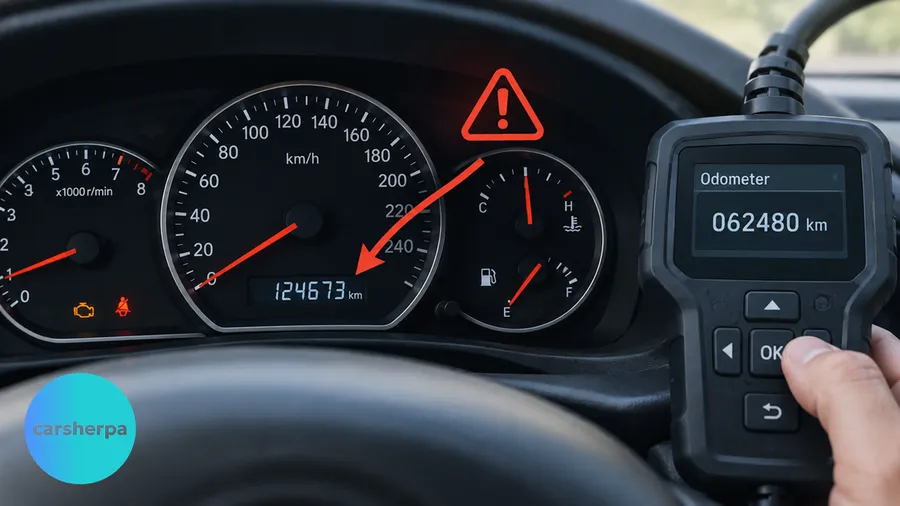
An OBD-II diagnostic scan reads the electronic control units (ECUs) throughout the vehicle, many of which store their own mileage records independently of the dashboard display. Professional diagnostic equipment can compare the ECU-stored mileage against the displayed figure — a discrepancy between the two is a definitive indicator of manipulation.
Paint thickness measurement, while primarily used for accident damage assessment, also contributes to odometer verification. Bodywork that's been repainted — whether due to accident repair or cosmetic refurbishment associated with a preparation-for-sale process — tells a more complete story about the vehicle's history.
What to Do If You Suspect Fraud
If a vehicle history check or physical inspection raises mileage concerns, the correct response is to walk away unless the seller can provide documented evidence that explains the anomaly. Partial service records, a single ambiguous stamp, or the seller's verbal assurance are not sufficient. Odometer fraud voids any implied warranty on the vehicle and significantly reduces your legal recourse if problems emerge after purchase.
Every CarSherpa inspection includes a full OBD-II diagnostic scan, paint thickness measurement, and a cross-reference of physical wear against claimed mileage. We've caught manipulated odometers that passed a visual inspection and cleared a basic history check — the combination of methods is what makes the difference. If you're considering a vehicle in Budapest or the surrounding area, contact us before you commit.