If you are buying a used car in Hungary as an expat, you are going to encounter a lot of unfamiliar bureaucracy. But there is one specific 19-letter word that catches almost every foreigner off guard: Eredetiségvizsgálat.
Translated literally as the "Origin Check" or "Authenticity Exam," this is a mandatory government hurdle. If you don't have this document, you physically cannot put the car in your name.
Here is the no-nonsense breakdown of what the Eredetiségvizsgálat is, why it matters, and the golden rule of who should pay for it.
What Does the Eredetiségvizsgálat Actually Check?
The Origin Check is a strict, government-mandated physical inspection of the vehicle. It is entirely separate from the standard technical MOT (Műszaki vizsga).
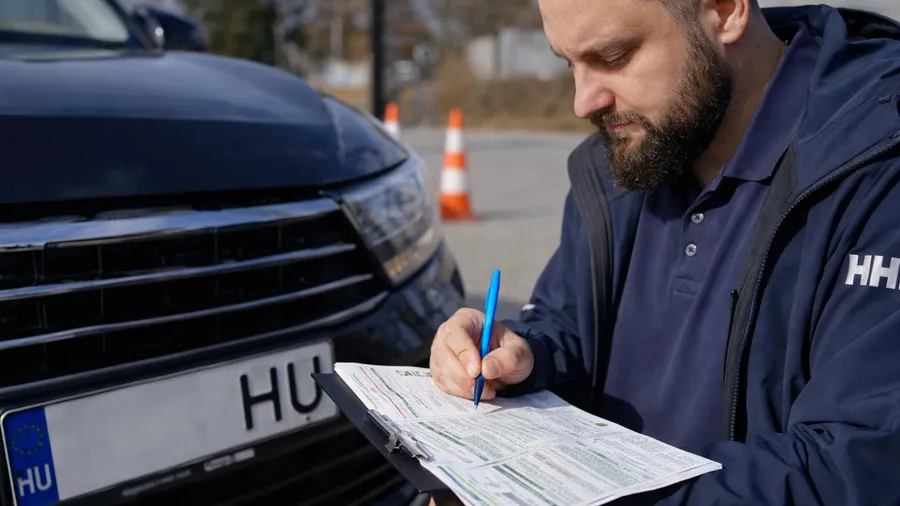
Its sole purpose is to verify the legal identity of the car to prevent the sale of stolen, cloned, or illegally modified vehicles. An official inspector will photograph the car, run it through the interpol/police databases, and physically check if the VIN (Chassis number) and Engine number have been ground off, re-stamped, or tampered with.
Once the car passes, you receive a certificate. This certificate is only valid for 60 days. You must complete the ownership transfer at the Kormányablak (government window) before it expires.
Eredetiségvizsgálat Cost in Hungary: 2026 Fee Breakdown
The fee is set by the Hungarian government and is based on the engine displacement (cc) of the car. As of the current regulations, the costs for passenger cars are:
- Up to 1400 cc: 17,000 HUF
- 1401 cc – 2000 cc: 18,500 HUF
- Over 2001 cc: 20,000 HUF
It takes about 30 to 45 minutes, and there are licensed inspection stations (Eredetiségvizsgáló állomás) all over Budapest and Hungary.
Who Pays for the Eredetiségvizsgálat — Buyer or Seller?
This is where negotiations get tricky. Hungarian law mandates that the check must be done before the title transfer, but the law does not state who has to pay for it. It is entirely up to the buyer and the seller to agree.
Here is the unwritten rule of the Hungarian used car market:
- Buying from a Dealership (Nepper): The dealer will almost always make the buyer pay for it as an "administrative extra." You can try to negotiate this into the purchase price.
- Buying from a Private Seller: It is highly recommended to split the cost 50/50, or ask the seller to pay for it.
How to Protect Yourself During the Eredetiségvizsgálat Process
Never hand over the full purchase price of the car until the Eredetiségvizsgálat is successfully completed. If you buy the car, take it to the check yourself, and it fails (because the engine number doesn't match the paperwork), the police can seize the car, and getting your money back from the seller will be a legal nightmare.
Always agree to meet the seller at the inspection station, or make passing the check a written condition in your bilingual sales contract.
Why You Need a Pre-Purchase Inspection Before the Origin Check
The Origin Check only looks at the legal identity of the car—it does not care if the transmission is failing, the hybrid battery is dead, or the car is rusting in half.
Viewing a car this week? CarSherpa verifies VIN and engine codes during every on-site inspection — so you arrive at the Eredetiségvizsgálat station already knowing the car is clean. No surprises, no seized vehicles, no legal nightmares.